Green Hydrogen: Decentralizing the Future of Industrial Power
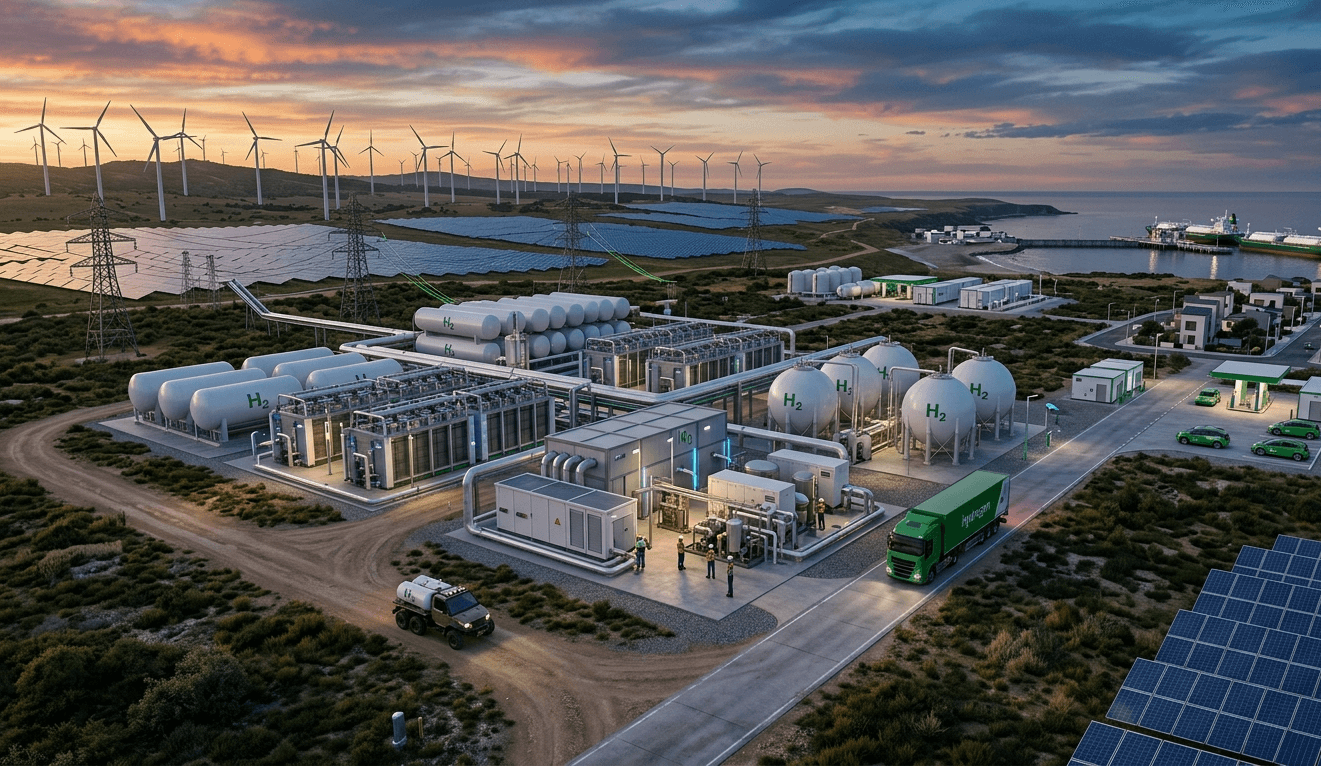
Exploring the shift toward sustainable, decentralized energy grids powered by zero-emission hydrogen technology.
For more than a century, industries have depended on centralized fossil fuel infrastructure to power manufacturing, transportation, and heavy industry. That model is beginning to change.
Green hydrogen—produced using renewable electricity—is emerging as a viable path to decarbonize sectors where electrification alone isn't enough. Steel production, chemicals, shipping, aviation, and large-scale manufacturing all require high-density energy that batteries struggle to deliver efficiently.
The real opportunity isn't just cleaner fuel—it's decentralized energy.
Instead of relying entirely on large, centralized power generation, industries can produce, store, and consume hydrogen closer to where it's needed. This improves energy resilience, reduces transmission dependency, and creates more flexible industrial operations.
Why It Matters
Green hydrogen has the potential to:
- ▸Reduce carbon emissions from hard-to-abate industries.
- ▸Improve energy security through localized production.
- ▸Store excess renewable energy for later use.
- ▸Support long-duration industrial power needs.
- ▸Accelerate the transition toward net-zero operations.
What Business Leaders Should Do
The shift won't happen overnight, but organizations can begin preparing today by:
- ▸Identifying operations where electrification isn't practical.
- ▸Evaluating hydrogen-ready infrastructure and equipment.
- ▸Exploring pilot projects with renewable energy integration.
- ▸Building digital platforms to monitor, optimize, and manage distributed energy assets.
Green hydrogen isn't replacing electricity—it's complementing it.
The organizations investing today won't simply reduce emissions. They'll build more resilient, flexible, and future-ready industrial ecosystems in an increasingly decentralized energy landscape.